
Annihilated Fatal Strike Guide: Break and Steal
How Fatal Strikes work in Annihilated: fill stagger, break the enemy, land a weapon's final use and seize its gear. Setup, timing and mistakes to avoid.
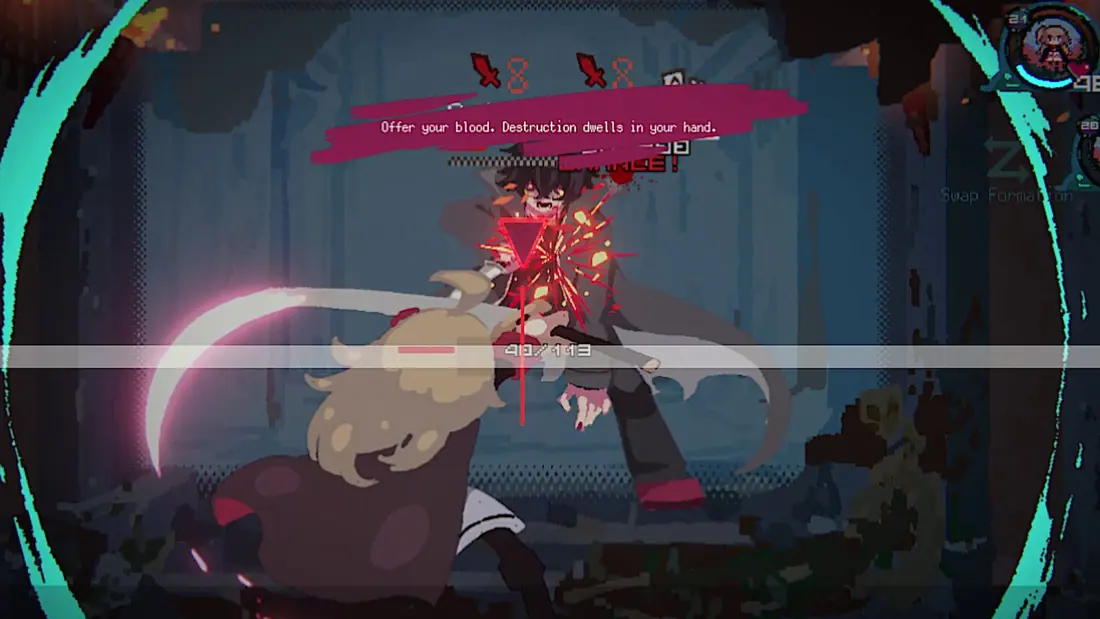
Quick answer: Stagger a foe until it breaks, then land a weapon's final use. That turns the hit into a Fatal Strike: an instant kill that also lets you seize the enemy's equipment. The whole combat economy is built around setting up that one moment without wasting the weapon earlier.
Fatal Strikes are the reason Annihilated's combat is not a damage race. A normal deck grinds a boss for ten turns and runs out of cards. A Fatal Strike deck spends nine turns building the break and one turn ending the fight, then walks away with the boss's weapon.
What are the exact Fatal Strike conditions?
Three things must be true at the same time:
- The enemy's stagger gauge is full, so it is in BREAK.
- The attack that lands is the final use of a weapon, not a middle use.
- The weapon is allowed to seize equipment. Cards marked "Cannot seize weapons" can still deal the killing blow, but they will not steal.
The demo shows both halves of the rule. Ice Rod and Soldier's Sword carry the "Cannot seize weapons" trait, while heavier weapons such as Magic Sword of Destruction are built for the finisher role. If your last-use hit comes from the wrong card, you get a kill without the loot.
Why does the final use matter?
A weapon is strongest on its last use. The card text spells this out: when only one use remains, the weapon breaks and disappears after the attack, and any destruction effect triggers on the break. That is not a drawback to work around. It is the design's way of making every weapon a one-shot burst package with a fuse.
Practical consequences:
- A four-use weapon is not "better" than a two-use weapon. It is a longer setup with a bigger payoff.
- Spending the last use on a normal enemy wastes the finisher. Spend it on a break.
- Destruction effects that double on break, such as Magic Sword of Destruction's, make the final use the correct use.
How do you build a stagger break reliably?
Count stagger, not damage. The boss HUD gives you exact numbers: The Outcast shows a stagger gauge in the hundreds and a break marker on its health bar. If your deck adds 20 stagger per turn and the gauge is 200, you need ten turns, which is longer than your healing will last.
A reliable break plan uses three layers:
- Opening stagger: a cheap multi-hit or heavy card in the first two turns, before the enemy's big telegraph.
- Sustain: one heal or guard per cycle so the party survives the buildup.
- Finisher: a weapon held at one use, not spent on chip damage.
The common failure is spending the finisher early because the boss looked low. Health bars lie in this game; the break gauge is the real progress bar.
When should you spend Curses during a setup?
Use Curses to protect the setup, not to accelerate it. Defy fate is best spent when a bad roll would kill the partner who is carrying the stagger plan, or when a failed input would waste the finisher's last use.
Do not spend a Curse to reroll a mediocre damage card. The setup takes several turns, and you need the Curse for the turn where everything goes wrong at once.
Does the battle style change Fatal Strike timing?
Yes, in feel rather than in math. In timing mode, the final use asks you to land an input under pressure, and the cursor speed modifier on some weapons makes that harder. In probability mode, the Dead or Alive wheel decides whether the hit connects cleanly.
If you keep missing the finisher input, switch styles before you conclude the build is bad. The Fatal Strike window is generous compared with a normal attack, but not so generous that a tired player cannot fumble it.
Once the last use is spent, the weapon is gone. If the enemy is not broken, you traded your execution for a normal hit and a Curse.
Official source: Annihilated on Steam ↗

What do you steal from enemies?
Seizing equipment gives you the enemy's weapon or item, which is how a run's inventory improves without a shop. The demo's Goblins carry simple iron weapons; The Outcast carries something worth the setup, which is why the first boss is also the first real reward.
Stolen gear arrives as a card with its own uses and traits. That means a successful Fatal Strike can replace the weapon you just broke, which is the loop the game wants: break a weapon to kill, steal a better one to repeat.
Not every enemy is worth a Fatal Strike. A Goblin's iron sword is not worth holding a finisher for three floors. Save the setup for elites and bosses, and use ordinary kills on ordinary enemies.
What is the safest Fatal Strike routine?
For a first run, use this sequence:
- Clear normal encounters with mid-use cards and heals.
- Enter a boss with one weapon at one use and one backup at two or more.
- Spend the first turns on stagger and defense, never on the finisher.
- When BREAK appears, confirm the finisher card can seize weapons.
- Land the final use, take the equipment, then heal with the stolen item if it heals.
If the break happens earlier than expected, do not panic-spend. You can hold a break for one turn in most fights, and a held break is better than a wasted finisher.
The Outcast boss guide→ puts the full break sequence into practice, and the weapon list→ shows which cards are worth saving for the finisher.
FAQ
Can any weapon perform a Fatal Strike?
Any weapon can land the killing hit on a broken enemy, but only weapons without the "Cannot seize weapons" trait will steal equipment.
Do Fatal Strikes work on bosses?
Yes. The Outcast is the demo's intended Fatal Strike tutorial. Bosses have larger stagger gauges, so the setup is longer, not impossible.
What happens if the final use misses?
The weapon still breaks. You lose the finisher and gain a Curse, and the enemy remains at whatever stagger it had.
Is it worth breaking a weapon outside a break?
Sometimes. A destruction effect that clears a wave or saves a partner is worth the weapon. As a habit, no: the break is where the value concentrates.